
Temporary buildings for film productions give crews secure, weatherproof space for workshops, wardrobe, offices and storage without the time and cost of a permanent build. The right option depends on how long you need the space, what it will be used for and the conditions on site. This guide covers the main choices and what to check before you order.
How productions use temporary buildings
Studio sites and location bases rarely have enough covered space for everything a production needs. Temporary and semi-permanent buildings fill the gap for:
- Workshops and set construction, where carpenters, painters and riggers need dry, well-lit space with room for large pieces
- Art departments, for design, model making and prop dressing
- Wardrobe and costume, where garments need to stay clean, dry and secure
- Hair and make-up, which needs good light, power and a comfortable temperature
- Props and stores, for secure storage of valuable or bulky items
- Production offices, close to the stage or set
- Equipment storage, for lighting, grip and camera kit between shoots
Temporary building, marquee or permanent build?
There are three broad ways to add space. Each suits different situations.
Temporary and semi-permanent buildings
These are rigid structures that can be specified with insulated walls and roofs, roller shutters and pedestrian doors. They are lockable, weather-tight and comfortable to work in for long periods, which makes them a good fit for workshops, wardrobe, stores and offices that will be used for months rather than days. Our temporary buildings and modular structures service covers the options.
Marquees and production tents
Frame marquees and clear-span tents are quick to put up and well suited to shorter-term or front-of-house uses: catering, green rooms, dressing rooms, audience holding, temporary production offices and weather-protected canopies for studio access. They are generally less secure and less insulated than a rigid building. See our commercial marquees and production tents for more.
Permanent buildings
For a studio site planning long-term growth, a permanent building or a conversion of existing space may make more sense. It takes longer and usually involves full planning and building control processes, but it becomes a lasting asset. Existing buildings can also be converted and fitted out as workshops, offices and support space through an internal fit-out.
As a rule of thumb, the longer you need the space and the more valuable its contents, the more a rigid, insulated building is worth considering over a marquee.
Specifying temporary buildings for film and TV productions
Bespoke temporary buildings can be specified to suit the job. The main choices are:
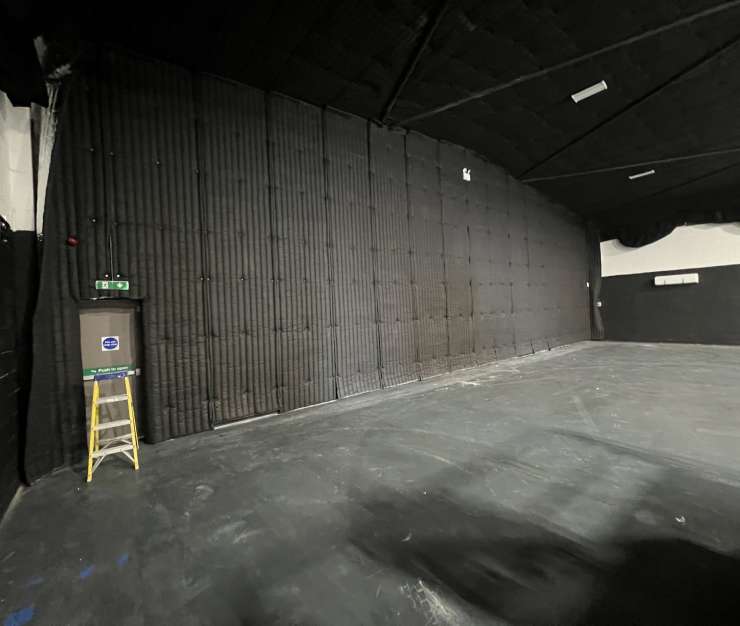
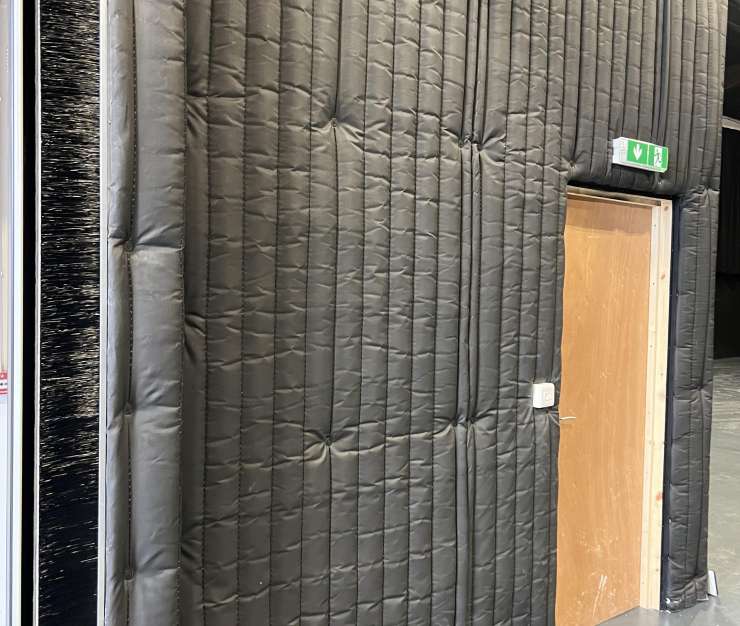
- Insulated walls and roofs. Insulation keeps the building warmer in winter and cooler in summer, reduces condensation and makes the space more pleasant to work in. It also helps with noise.
- Roller shutters. Large openings let vehicles, set pieces and equipment move in and out easily.
- Pedestrian doors. Separate doors for everyday access and as part of the fire escape strategy.
- Flooring. From a simple floor over hardstanding to finished floors for offices and wardrobe.
- Lighting. Good general lighting for workshops and task lighting for areas such as hair and make-up.
- Internal fit-out. Partitions, offices, storage and other fit-out to suit how each department works.
Think about noise as well. A busy workshop next to a sound stage can cause problems during takes, so position noisy uses carefully. On a temporary building with a hard metal roof, rain noise can be reduced with external matting, as described on our rain noise reduction page.
Site considerations
Ground conditions
Temporary buildings need firm, reasonably level ground. Hardstanding such as concrete or tarmac is simplest, but structures can be installed on other surfaces with the right preparation. A site visit early on helps identify slopes, soft ground, drainage and buried services before the design is fixed.
Access
Consider how the building will be delivered and installed, including access for delivery vehicles and any lifting equipment. Then think about everyday use: vehicle routes to roller shutters, pedestrian routes and emergency access.
Power and services
Most production buildings need power for lighting, heating and tools. Check whether there is a suitable mains supply nearby or whether temporary power will be needed. Wardrobe and make-up may also need water and waste connections.
Planning permission and building regulations
Temporary does not always mean exempt. Depending on how long a structure stays in place, its size and how it is used, it may still need planning permission and may need to meet the Building Regulations, for example on fire safety and means of escape. The rules vary, so check with the local authority early. On land you do not own, make sure the landowner or site operator has agreed to the structure.
Lead times
Lead times depend on the size and specification of the building, how bespoke it is, how much site preparation is needed and whether any approvals are required. Simpler buildings on prepared sites can be arranged relatively quickly, while large or highly specified structures take longer to design and prepare. Where planning permission is needed, it can be the longest part of the process.
Once on site, temporary buildings are fast to install with minimal disruption to the rest of the site. The best advice is to get in touch as early as possible, especially if your production has fixed dates.
Questions to ask before you order
- How long will the building be needed, and could that change?
- What will it be used for, and does that need insulation, security or specific fit-out?
- What are the ground conditions and access like?
- Is power available, and how much will be needed?
- Does the structure need planning permission or building regulations approval?
- Will it be close to a stage, and could noise be an issue?
Modular car parks
Parking is often under pressure on busy studio sites, with crew vehicles, unit trucks and visitors competing for space. Demountable modular car parks add extra parking capacity on an existing footprint and can be dismantled when no longer needed, making them a useful companion to temporary buildings on growing sites.
See an example
Our insulated temporary buildings case study shows the kind of structure we provide for productions and studio sites.
Discuss your requirements
If you need extra workshop, wardrobe, storage or office space for a production, tell us how you plan to use it, where it will go and when you need it. Contact our team to talk through the options.