
Soundproofing vs acoustic treatment is one of the most common points of confusion on studio projects. Soundproofing stops sound getting into or out of a space, while acoustic treatment controls how sound behaves inside it by reducing echo and reverberation. Most film and TV studios need both, but in different measures depending on how the space is used.
What is soundproofing?
Soundproofing, more accurately called sound insulation, is about stopping sound passing through the building fabric. In a studio, that means keeping traffic, aircraft, rain and neighbouring activity out, and keeping loud work such as music, effects or workshops in.
It relies on a few physical principles.
Mass
Heavier, denser constructions are harder for sound to set vibrating, so they let less through. This is why specialist soundboards and multiple layers of board are used in studio walls and ceilings.
Decoupling and isolation
If two layers of a wall are rigidly connected, vibration passes straight from one to the other. Separating them, with independent stud frames, resilient fixings or rubber isolation materials, breaks that path. Isolation is especially important for low-frequency sound, which is the hardest to stop.
Airtightness
Sound travels through any gap. A well-built wall can be let down by an unsealed door, a service penetration or a poorly finished junction. Sealing these details is as important as the main construction.
Cavity absorption
Filling the cavity within a wall or ceiling with mineral wool insulation such as Rockwool dampens sound bouncing around inside the construction and improves its overall performance.
In practice, studio soundproofing combines these principles using acoustic stud wall systems, Rockwool insulation, specialist soundboards and rubber isolation materials. Roofs, doors and roller shutters are often the weakest points and need particular attention.
What is acoustic treatment?
Acoustic treatment deals with sound inside the room. Hard surfaces such as concrete floors, block walls and bare metal roofs reflect sound, creating echo, long reverberation and flutter between parallel walls. For dialogue recording, that makes voices sound distant and unclear.
Treatment uses absorbent materials to soak up some of that reflected energy, so the room sounds controlled and natural. Common options in film and TV studios include:
- ABS (Acoustic Barrier System). A fire-retardant, Class A sound absorption material used in UK film and TV studios. It can be installed as fixed wall treatment or as removable draped systems, and it controls echo and reverberation.
- Quilted acoustic blankets. Quilted acoustic fabric fitted to walls and ceilings, useful for treating large areas.
- Studio drapes. Heavy drapes that add absorption while also dividing space and controlling light.
Soundproofing vs acoustic treatment: the key differences
- Purpose. Soundproofing stops sound passing between spaces. Acoustic treatment controls reflections within a space.
- Materials. Soundproofing relies on mass, isolation and sealing. Acoustic treatment relies on soft, porous, absorbent materials.
- Where it goes. Soundproofing is built into the walls, ceilings, roof and doors. Acoustic treatment is usually fixed to or hung in front of interior surfaces.
- What it fixes. Soundproofing solves noise from outside, or noise escaping. Acoustic treatment solves echo, boominess and poor speech clarity.
Common misconceptions
“Acoustic panels will soundproof the room.” Absorbent panels and blankets make a room sound better, but on their own they do little to stop sound passing through walls. If outside noise is the problem, the building fabric needs attention.
“A heavy wall will fix the echo.” Dense, hard walls are good at blocking sound, but they also reflect it. A well-soundproofed room with no treatment can still sound like a concrete box.
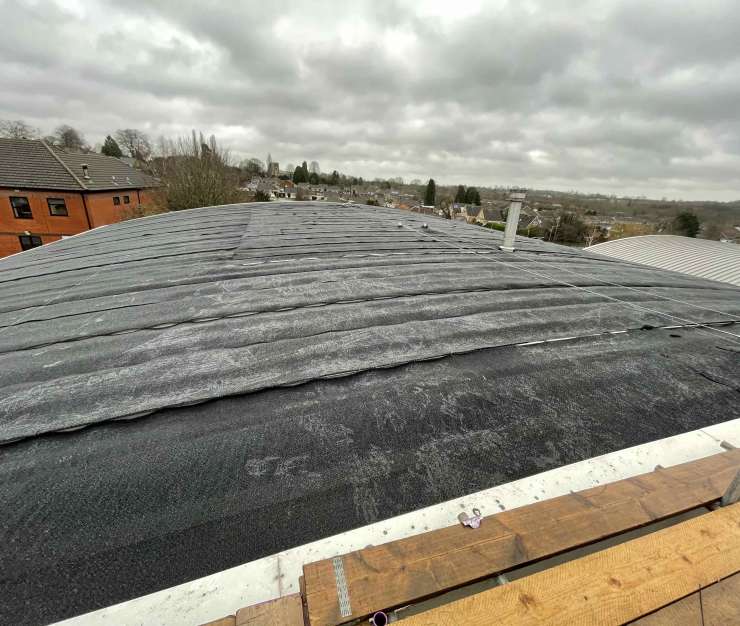
“Treating the inside will stop rain noise.” Internal treatment can take the edge off, but the drumming starts at the roof sheet. Tackling it at source with an external product such as Silent Roof Material is usually more effective. See our rain noise reduction service for details.
When does a studio need soundproofing, acoustic treatment or both?
- Sound stages recording dialogue. Both. Outside noise must be kept out and the interior must be controlled for clean sync sound.
- Silent stages and stills studios. Soundproofing is not essential, as sound is added in post or not needed. Some treatment can still help crews communicate and work comfortably.
- Event and production spaces. Often mainly treatment. In one North London warehouse converted to an event and production space, we fitted over 2,750 m² of quilted acoustic material to the walls and ceiling of two side-by-side warehouses to cut noise, echo and reverb. Read the internal acoustic treatment case study.
- Galleries and edit suites. Usually both, at a smaller scale. A mezzanine floor creating a studio gallery and edit suite shows how this kind of space can be built into unused headroom.
- Buildings near busy roads, flight paths or with lightweight roofs. Soundproofing first, as no amount of treatment will deal with noise coming through the fabric.
Temporary vs permanent options
Permanent soundproofing and treatment, such as built acoustic walls, ceilings and fixed ABS panels, suits studios and stages that will be used long term.
Temporary options suit leased buildings, short-term productions and spaces that need to change between uses. Draped ABS systems, quilted acoustic blankets and studio drapes can be installed for a production and taken down afterwards. They will not turn a noisy building into a sound stage on their own, but they can make a real difference to echo and reverberation with minimal alteration to the building.
Many projects combine the two: a permanent envelope upgrade where the building allows it, with removable treatment inside that can be adapted for each production.
Getting the balance right
The right mix starts with understanding the problem. Is noise getting in or out, or is the room itself sounding poor? Often it is both. Our soundproofing and acoustic treatment service covers permanent and temporary solutions, and we can include acoustic work as part of a wider studio internal fit-out.
For an example of both working together, our warehouse to sound stage conversion shows an industrial unit turned into a fully soundproofed production space.
Talk to an acoustic specialist
If you are not sure whether your studio needs soundproofing, acoustic treatment or both, we can assess the space and recommend a practical approach. Contact our team to discuss your project.